
TUCESYSTEMS
RESEARCH & DEVELOPMENT
Conceptual glass and metallic fibers carrying warm light through a sculptural braid

Independent research. Connected possibilities.

Signal.
Silicon.
Possibility.

Engineering communications hardware, custom silicon, and embedded systems for a more connected world.

Explore our research Miami, Florida · United StatesOptical braid / Concept illustration

01 / Our mission

Better connections begin
at the physical layer.

TUCE Systems, Inc. develops resilient wireless optical and RF communications hardware, redundant digital silicon IP, and embedded firmware for live-event, industrial, and defense applications.

Our focus is practical: turn ambitious system architectures into prototypes that can be measured, refined, and integrated into real applications.

02 / Research programs

Three disciplines.
One connected system.

From the light carrying the data to the silicon processing it, our programs explore the complete communications path.

Illustrative braid of illuminated optical fibers
01 — Optical transport / Concept illustration
01 / Optical + wirelessIn development

Light as
a connection.

Exploring multi-channel free-space optical links with a complementary millimeter-wave path. The goal: high-bandwidth transport with link monitoring and controlled failover when conditions change.

48 GbpsOptical research target
60 GHzProposed RF band
Research direction

Work centers on multi-wavelength optical transport, FPGA-based data paths, receiver monitoring, and a complementary RF link. Optical throughput and RF fallback capacity are distinct. Rate, range, switching performance, and optical safety require hardware validation.
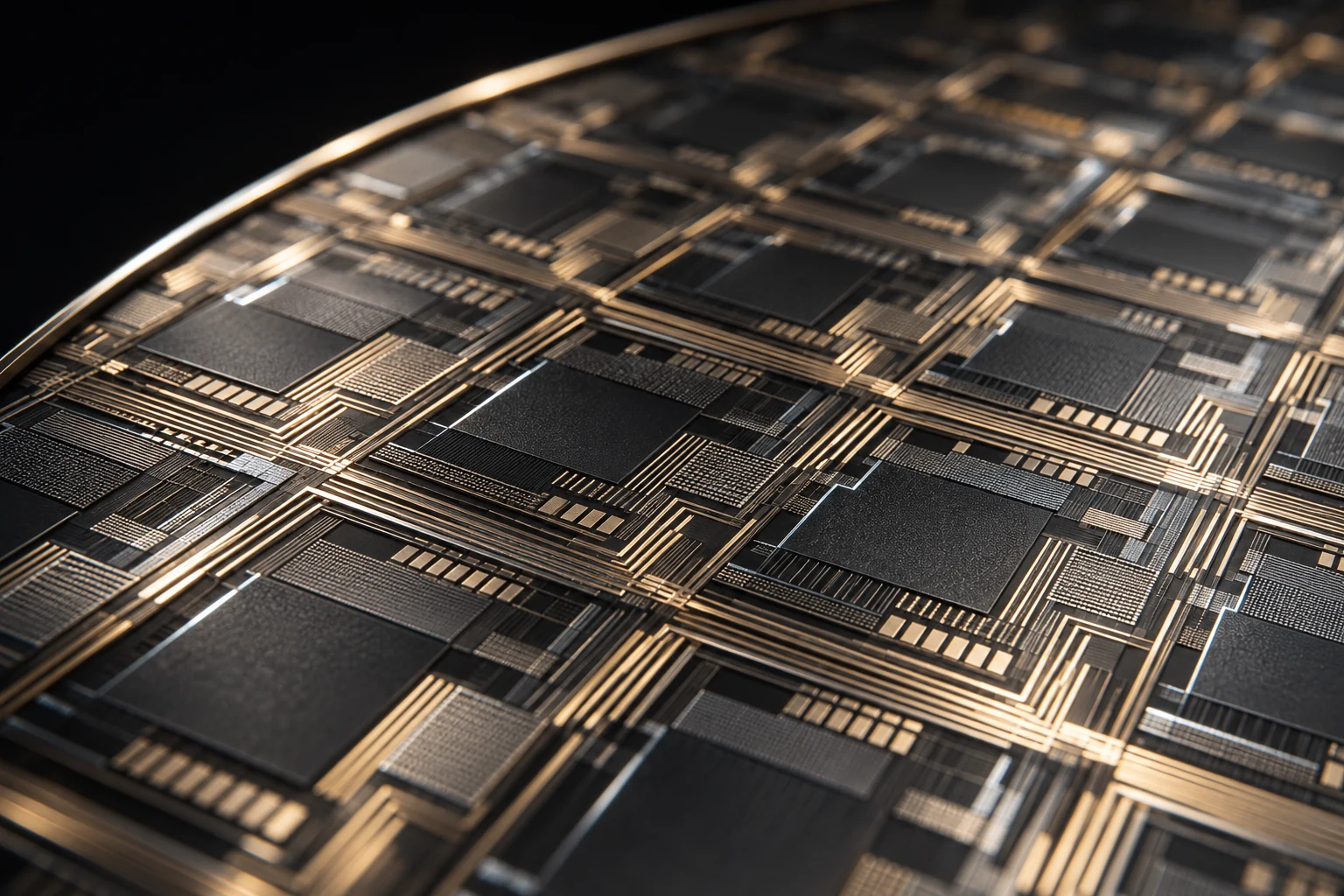
Conceptual close-up of geometric traces across a silicon surface
02 — Silicon architecture / Concept illustration
02 / Silicon IPIn development

Architecture
at every scale.

Aether-Braid explores digital architectures for signal processing, redundant data paths, and hardware control. Our development spans register-transfer-level design, verification, and physical implementation.

RTL → SiliconDesign + implementation research
Research direction

Areas of work include Golay-based signal processing, CORDIC computation, fixed-point modeling, and control logic for communications systems. Custom silicon development is investigated using the SkyWater 130 nm process design kit. Fabrication readiness is established separately for each design.

03 — Signal + control / Abstract visualization
03 / Embedded systemsIn development

Intelligence
within the link.

Developing firmware and hardware control for systems that monitor, adapt, and communicate. Our research connects link supervision, signal processing, and hardware-assisted security.

Observe. Adapt.Embedded control + verification
Research direction

Research includes telemetry, link-state monitoring, failover logic, and the integration of post-quantum key establishment with hardware data paths. Security properties and interoperability are validation objectives, not certification claims.

Research programs are under development. Numerical values describe design objectives, not demonstrated product specifications. Imagery is conceptual and does not depict fabricated TUCE hardware.

03 / Engineering approach

From a promising idea
to measurable evidence.

01 — Define

System architecture

Frame the application, interfaces, and performance budgets before committing to implementation.

02 — Model

Design & verification

Use reference models, RTL simulation, and targeted formal methods to examine behavior.

03 — Build

Hardware prototypes

Connect FPGA, embedded, optical, and RF components in focused test configurations.

04 — Measure

Evidence & iteration

Evaluate results against defined criteria, document limits, and use findings to guide the next design.

04 / The company

Independent by design.
Collaborative by nature.

TUCE Systems, Inc. is a Miami-based research and development company founded by Michael Baumert, a U.S. Army veteran. Our focus is communications hardware, silicon intellectual property, and embedded firmware.

We are pursuing research funding and technical collaborations to advance prototype development and measured validation for commercial and government applications.

Read the company brief
Location
Miami, Florida, USA
Founder
Michael Baumert
Focus
Hardware · Silicon IP · Firmware
Applications
Broadcast transport, industrial connectivity, and connected systems

05 / Contribute to the project

Open the full form →

Bring a
discipline.

TUCE Systems accepts research and technical contributions by review. Optical, silicon, and embedded work is evaluated by the company before any collaboration begins. Proprietary PHY details stay inside TUCE Systems, Inc.

Research collaboration
Optical / RF hardware
Silicon IP / RTL
Embedded firmware
Grant / program partnership
Other technical work
Name
Email
Organization
Contribution type
Statement
Work URL (optional)

06 / Research & collaboration

Back to top ↑

Let’s build
what connects us.

We welcome conversations with research partners, grant programs, and organizations exploring optical connectivity, silicon integration, and embedded systems.

Michael Baumert · Founder
Miami, Florida, United States

Name
Email
Organization
Message